A Guide to Office Space in London, UK

A practical guide to office space in London covering major business districts, market trends, and the growing role of flexible workspaces and serviced offices for modern businesses.
London remains one of the world's most sought-after business locations. Deep financial markets, a concentration of professional services, extensive international connectivity, and a broad talent pool continue to attract multinational headquarters, growing UK companies, and scale-ups alike. Businesses can choose from a wide range of workspace solutions, from traditional offices to hot desks and coworking spaces in London, reflecting the city’s increasingly flexible approach to how work gets done.
Geographic and Economic Overview
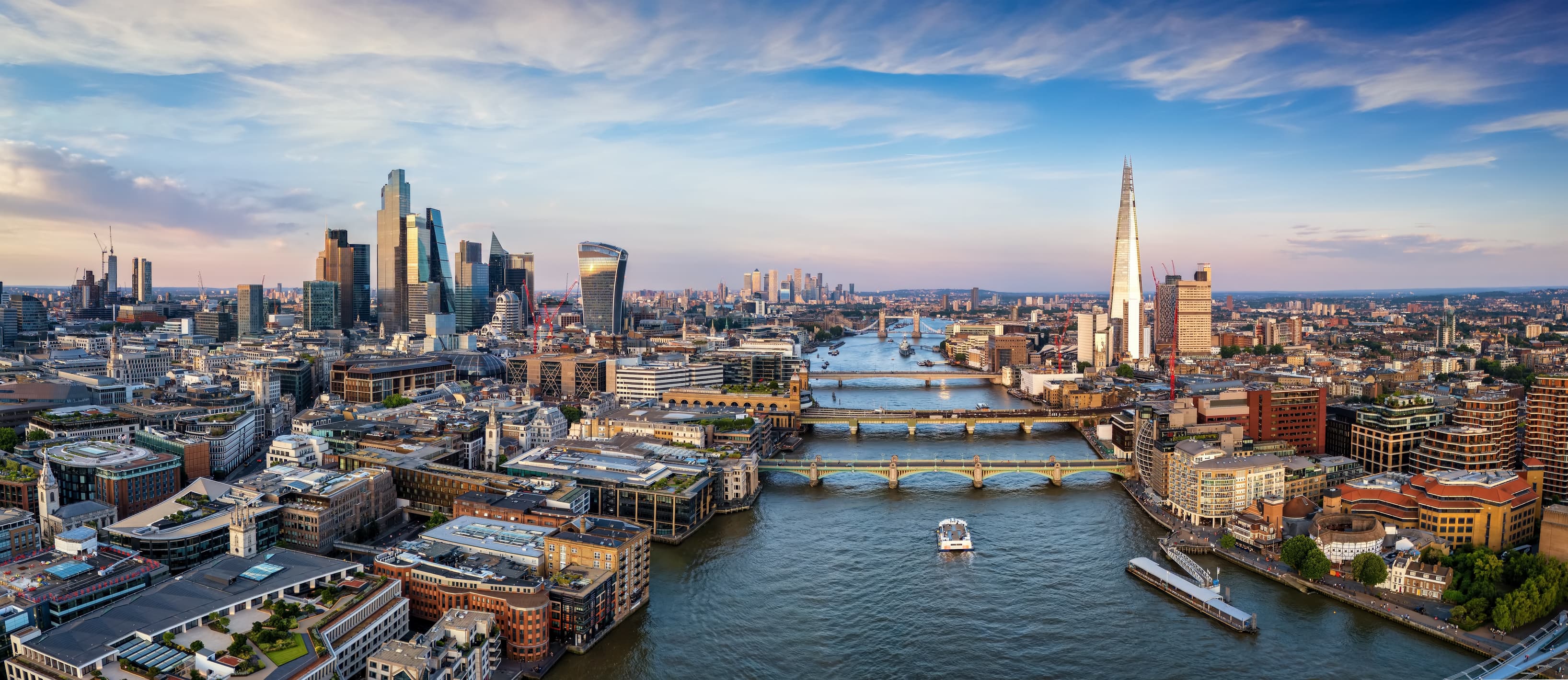
London’s commercial districts reflect the diversity of its economy. The City remains the centre of banking and insurance, the West End attracts professional and creative firms, and Canary Wharf provides large-scale corporate space. Areas such as King’s Cross, Old Street, White City and Stratford have developed strong sector identities, particularly in technology, media and research.
Transport is a core part of the city’s appeal. Extensive Underground and rail connections link all major business districts, while the Elizabeth line has significantly improved east–west travel times across the city. National rail services from hubs such as King’s Cross, Liverpool Street and Paddington connect London to the wider UK, and multiple international airports, including Heathrow, Gatwick, and London City, support global business travel. This level of connectivity plays a key role in where companies choose to locate, particularly those with distributed teams or frequent client travel.
Top Business Areas in the City
- City of London (Square Mile): The historic financial core, offering a high concentration of banking, insurance, and legal firms, with strong transport links via Bank, Liverpool Street and Farringdon.
- West End (Mayfair, Soho, Covent Garden): A central, client-facing location popular with private equity, media, and professional services firms that value visibility and prestige.
- Canary Wharf and Docklands: A modern business district known for large floorplates and campus-style developments, attracting major financial institutions and global corporates.
- King’s Cross and St Pancras: A regenerated knowledge and technology hub, benefiting from proximity to universities and exceptional national and international rail connections.
- Old Street and Shoreditch: A centre for digital, technology and creative companies, characterised by flexible workspace and smaller units suited to scaling teams.
- South Bank and London Bridge: A mixed commercial area combining modern office buildings with strong transport links and proximity to cultural and retail amenities.
- Stratford and the Olympic Park area: A growing commercial location in East London offering newer developments, competitive rents, and strong connectivity via Stratford station.
Notable Companies Based in London
- HSBC: Global banking group with significant Canary Wharf operations.
- Barclays: Major UK bank with large London presence.
- BP: International energy company headquartered in London.
- Unilever: Multinational consumer goods company with major corporate offices in the city.
- GlaxoSmithKline (GSK): Pharmaceuticals company with headquarters and R&D operations in and around London.
- Google: Significant UK campus and offices in King’s Cross and central London.
- Amazon: Major offices and fulfilment operations across London.
Why Businesses Choose London
London offers one of the deepest labour markets in the world. Graduates and experienced professionals across finance, technology, law, and creative sectors are available in volumes that few cities can match.
Access to capital and professional services is another factor. Law firms, consultancies, investment banks, and accountancy firms are concentrated in central districts, reducing friction for businesses that rely on them regularly.
Connectivity plays a role too. Fast links to clients, partners, and overseas markets support day-to-day operations, while the clustering effect means businesses benefit from proximity to suppliers, collaborators, and sector peers.
Office Space Costs and Market Positioning
The West End and the City command the highest rents, reflecting demand for central and prestigious locations. Canary Wharf is also premium but often offers larger floorplates at slightly more competitive rates. King's Cross and South Bank price strongly due to their appeal to technology and creative occupiers.
More affordable options exist in Stratford, White City, and parts of South and West London, where transport links remain strong. Serviced offices, private offices, and coworking space in London typically bundle costs on a per-desk basis, while traditional leases involve rent, rates, service charges, and fit-out. Many businesses now combine a core headquarters with flexible workspace to balance cost and agility.
Office Operators in London
The following operators currently have some of the highest numbers of workspace locations across London, making them a useful starting point for businesses exploring the market.
Sub800
Sub800 specialises in all-inclusive managed offices for smaller teams across central London. With a growing portfolio spanning around 14 neighbourhoods, it bridges the gap between a traditional lease and a fully serviced office, offering customisable spaces with concierge support included. Location examples include 140 Fenchurch Street in the City and 46 Dean Street in Soho.
International Workplace Group (IWG)
The largest flexible workspace operator in the world by footprint, IWG operates across London under several brands including Regus, Spaces, and Signature. With locations across all major business districts, it suits businesses that need scalability and consistency, whether for a single desk or an entire floor. Location examples include Spaces Victoria, Regus Piccadilly Circus, and HQ Vauxhall.
WorkPad Group
WorkPad specialises in premium serviced offices within period and heritage buildings across central London, with locations concentrated in Mayfair, Soho, Fitzrovia, and Covent Garden. It tends to attract professional services firms and SMEs looking for a more characterful, private environment. Location examples include 9-11 Broadwick Street in Soho, 41-44 Great Queen Street in Covent Garden, and Lynton House in Saint Pancras.
Fora
Fora operates design-led workspaces across London and beyond. Its spaces offer private offices, coworking and meeting facilities with strong amenity provision, and the operator has committed to reaching net-zero carbon by 2030. Location examples include The News Building in London Bridge, 133 Whitechapel High Street in Whitechapel, and 24 Greville Street in Farringdon.
Workspace Group
A London-focused operator with over 35 years in the market, Workspace Group manages more than 60 buildings across the capital. Its portfolio favours characterful, often converted properties with flexible terms, appealing to growing businesses that want a more permanent base without a traditional long lease. Location examples include 1 Phipp Street in Shoreditch, 203-213 Mare Street in Hackney, and 1-45 Durham Street in Vauxhall.
Find available office space in London at Worka.com.
A Practical Perspective for Businesses
London offers a wide range of office solutions, from prestigious headquarters in the City and West End to modern hubs in Canary Wharf, King’s Cross, and Stratford. As businesses increasingly prioritise agility and hybrid working, flexible offices and coworking spaces provide a practical way to access prime locations without long-term commitments. For a breakdown of different types of flexible workspace, see our comparison guide.
For companies seeking adaptability, community, and connectivity, London's flexible workspace market offers a strong foundation for growth.