How to Build a Thriving Coworking Community in 2026


The difference between a coworking space that retains members long-term and one that struggles with churn often comes down to community. Here's what building it well looks like in 2026.
Table of Contents
The best coworking spaces are not just well-designed offices. They are places where people genuinely want to show up. The difference between a space that retains members long-term and one that struggles with churn often comes down to one thing: community. Not the word, but the practice of it.
Building that kind of environment takes deliberate effort. Here is what works in 2026.
Start With Who You Are Trying to Attract
Community does not happen by accident, and it does not happen by trying to appeal to everyone. The spaces that build the strongest member cultures tend to have a clear sense of who they are for. That might be freelancers and entrepreneurs, early-stage startups, remote workers from enterprise companies, or a mix of creative and professional services businesses.
Knowing your member profile shapes everything downstream: the events you run, the way you communicate, the layout of your space, and the kinds of introductions you make between members. Trying to build community without that foundation is like designing a product without knowing your customer.
Onboarding Is Where Community Begins
Most operators underestimate the first two weeks of a new member's experience. This is the period where habits form and where people decide, often subconsciously, whether they feel like they belong.
A strong onboarding process does not need to be elaborate. It needs to be consistent. A personal welcome from a team member, a brief introduction to a few relevant people in the space, and a clear sense of what is available and how things work. Members who feel oriented and connected early stay longer. Those who feel like they are figuring it out alone tend to drift.
Events Should Have a Purpose, Not Just a Presence
Running regular events is widely understood as part of community building. What matters less is the frequency and more is the fit. A networking breakfast that draws twelve engaged members creates more value than a large panel event where people arrive, listen, and leave without speaking to anyone.
The most effective community events in coworking spaces in 2026 tend to be smaller, more focused, and designed around a genuine shared interest or need. Workshops, peer roundtables, collaborative working sessions, and informal socials all have their place. The common thread is that they give members a reason to interact with each other rather than simply share a room.
Facilitate Connections, Do Not Just Host Them
One of the most underused tools available to community managers is the deliberate introduction. Not a mass email to all members, but a targeted message: "I thought you two should know each other because..."
This takes time, and it requires knowing your members well enough to spot the relevant connection. But the return on that investment is significant. Members who have formed real professional relationships inside a space are far less likely to leave. They are also far more likely to refer others.
A simple way to build this habit is to spend time in the common areas during peak hours each week with the specific goal of making two or three introductions. Over the course of a month, that compounds.
Communication Keeps the Community Alive Between Visits
Not every member is in the space every day. Remote professionals, hybrid workers, and part-time members can easily lose the thread of what is happening if communication is inconsistent or hard to access.
A regular member update, whether that is a short weekly email, a well-maintained Slack channel, or a combination of both, keeps the community coherent. It does not need to be long. A summary of upcoming events, a member spotlight, and any relevant space updates is enough. The goal is to make members feel connected to the space even on the days they are not there.
Physical Environment Shapes Social Behaviour
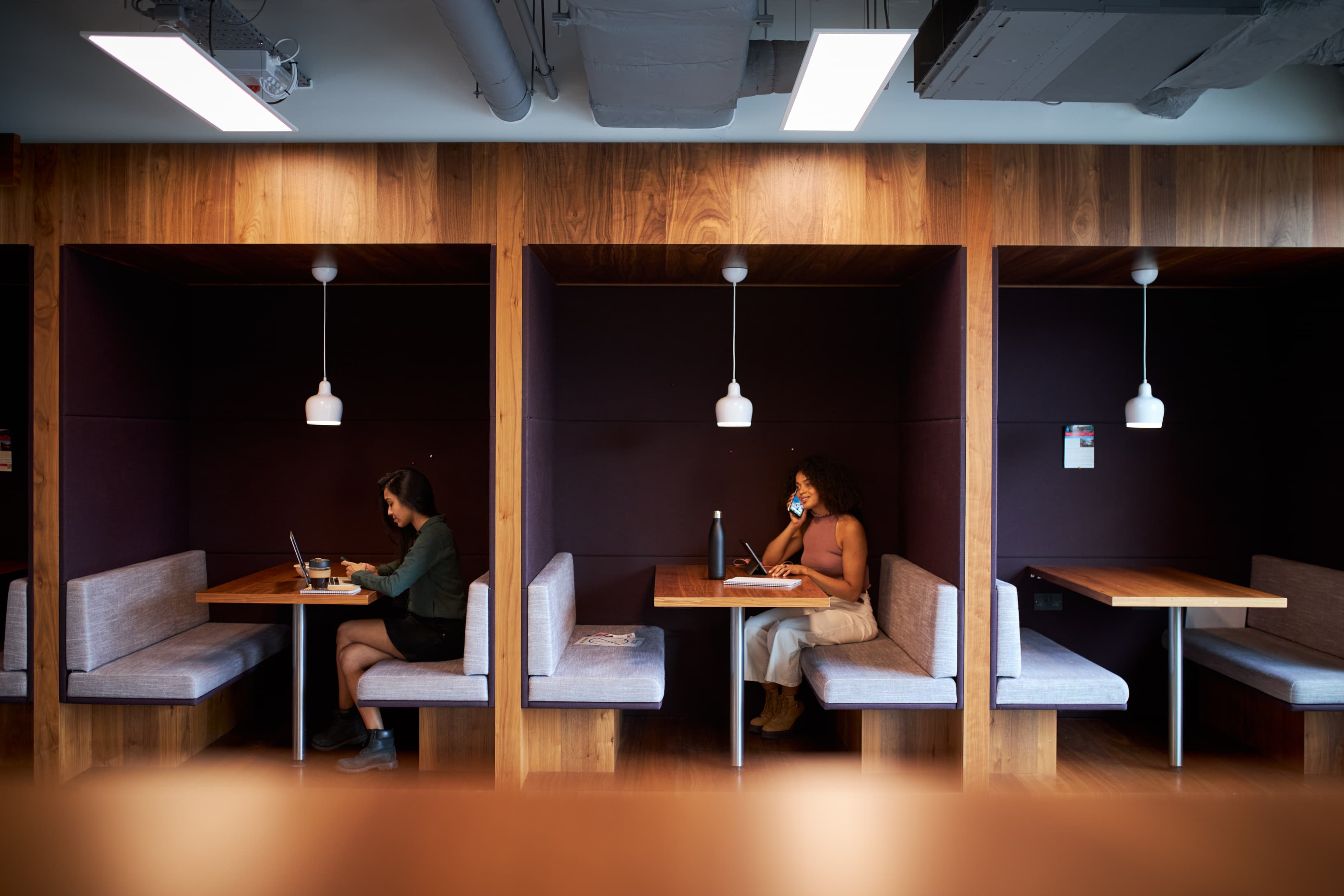
The design of a coworking space has a direct effect on how much interaction happens naturally. Features such as long shared tables, open kitchen spaces, and casual seating areas create opportunities for people to cross paths, making conversations and connections more likely without the need for formal organisation.
This does not mean open plan is always the answer. Members need quiet spaces and privacy options too. The key is designing the flow of the space so that members pass through shared areas naturally in the course of their day, rather than moving directly from the entrance to a private office and back again.
Gather Feedback and Act On It
Members who feel heard are more likely to stay. A short quarterly survey, combined with informal conversations throughout the year, gives operators the information they need to improve and signals to members that their experience matters.
The feedback itself is less important than what happens next. If members raise something consistently and nothing changes, the trust erodes. If something changes and you tell members it changed because of their input, the effect on loyalty is measurable.
Community and Commercial Performance Are Not in Tension
There is sometimes a perception that investing in community is a soft concern, separate from the commercial realities of running a coworking space. The evidence points the other way. Spaces with strong member communities tend to have higher retention rates, lower acquisition costs, and more organic referrals. Members who feel a genuine sense of belonging are also more likely to upgrade their membership, book meeting rooms, and bring clients and guests into the space.
Community is not an added feature. It is the core product.
Finding the Right Space is the First Step
For professionals looking for a flexible workspace where community is built into the experience, the quality of the environment matters as much as the desk or the broadband. Worka lists flexible workspaces across hundreds of cities, with detailed information on each space to help you find somewhere that fits the way you work.
Explore Flexible Workspaces on Worka.com
Find a workspace that fits the way you work. Browse flexible offices, coworking spaces, and day passes across hundreds of cities on Worka.com.